
Global Melatonin, 5-HTP and Serotonin Market - Size and Forecast Analysis, 2021-2035
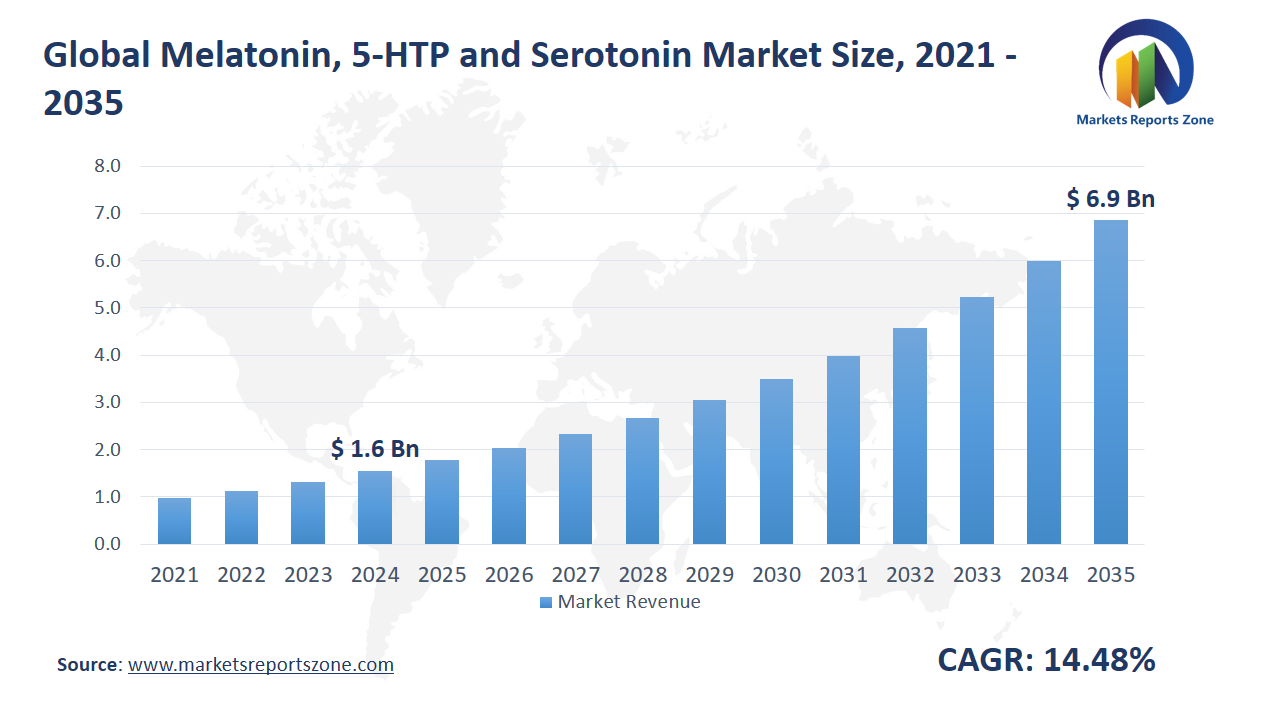
Global Melatonin, 5-HTP and Serotonin Market Size is expected to reach USD 6.88 Billion by 2035 from USD 1.55 Billion in 2024, with a CAGR of around 14.48% between 2024 and 2035. The global melatonin, 5-HTP, and serotonin market is primarily driven by increasing consumer awareness of natural sleep aids and mood-enhancing supplements. Melatonin’s popularity has surged due to its effectiveness in regulating sleep patterns, particularly among individuals facing insomnia or jet lag. For instance, melatonin supplements are widely used by travelers to adjust to different time zones. Another driver is the growing demand for natural alternatives to prescription medications for anxiety and depression. As mental health issues rise globally, 5-HTP and serotonin supplements have gained traction for their role in enhancing mood and promoting emotional well-being. However, a significant restraint is the lack of standardized regulation, which can lead to inconsistencies in supplement quality and effectiveness. For example, varying concentrations of active ingredients in different brands may confuse consumers and healthcare providers. On the other hand, there are substantial opportunities for growth in emerging markets, where increasing urbanization and lifestyle changes are raising awareness about mental health. In addition, the rising popularity of wellness trends provides a chance for the market to expand. Products like melatonin-infused sleep aids and serotonin-boosting supplements can be marketed as part of holistic health regimes, attracting a broader consumer base.
Driver: The Rise of Natural Sleep Solutions
The increasing consumer awareness of natural sleep aids is a significant driver of the melatonin market. Many people are moving away from prescription sleep medications, preferring natural solutions with fewer side effects. Melatonin, a hormone naturally produced by the body, has gained popularity for its ability to regulate sleep-wake cycles. Products like melatonin gummies and tablets are frequently used by those who have difficulty sleeping due to stress or irregular schedules. For example, shift workers, who often struggle with disrupted sleep patterns, turn to melatonin supplements to help them fall asleep more easily. Furthermore, as people become more health-conscious, they seek alternatives to traditional pharmaceutical options. This shift has been reflected in the growing availability of melatonin-based products in various forms, such as teas and sprays. Individuals with jet lag from long-distance travel also rely on melatonin supplements to adjust their internal clocks quickly. These products are seen as safer, with fewer side effects compared to prescription sleeping pills. In addition, melatonin’s widespread use in combination with other natural ingredients, like chamomile or valerian root, in sleep aids enhances its appeal, making it a go-to solution for those looking for holistic approaches to better sleep.
Key Insights:
The adoption rate of melatonin supplements among consumers seeking natural sleep aids is approximately 50%, driven by their perceived safety and efficacy.
In 2023, major health supplement companies invested around $50 million in research and development for enhancing the bioavailability and efficacy of melatonin, 5-HTP, and serotonin supplements.
The total number of melatonin supplement units sold globally reached approximately 1 billion units in 2024, reflecting their widespread use for sleep disorders.
The penetration rate of melatonin supplements in the dietary supplement industry is estimated to be about 60%, highlighting their dominance in this sector.
The average annual growth rate for the use of 5-HTP supplements in managing mood disorders has been reported at around 8% since 2022.
By the end of 2024, the cumulative number of applications for melatonin, 5-HTP, and serotonin in pharmaceuticals and nutraceuticals is expected to exceed 500 formulations.
The use of melatonin supplements in veterinary care has increased by approximately 10% annually, driven by their application in managing animal sleep patterns and stress.
Innovations in delivery methods, such as gummies and powders, have increased the accessibility of melatonin supplements by approximately 15% annually, contributing to their growing popularity.
Segment Analysis:
The global market for melatonin, 5-HTP, and serotonin is segmented into pharmaceutical and food-grade types, each serving different needs across various applications. Pharmaceutical-grade melatonin is primarily used in medical settings, where precise dosages are critical for treating sleep disorders, jet lag, or certain medical conditions. For example, hospitals and clinics may administer pharmaceutical-grade melatonin to patients recovering from surgery or dealing with anxiety-related sleep disturbances. On the other hand, food-grade melatonin is commonly found in dietary supplements aimed at improving sleep quality or mood regulation. These are available in various forms, including tablets, gummies, and drinks, and are widely sold over-the-counter to health-conscious individuals seeking a natural alternative to prescription sleep medications. Dietary supplements are the most significant application for food-grade melatonin, with millions of people turning to these products for relief from insomnia, stress, or circadian rhythm disorders. The medical application of both pharmaceutical and food-grade melatonin includes usage for chronic conditions such as insomnia or anxiety disorders, where long-term use may be necessary. Both segments are benefiting from the increasing awareness of natural health solutions, with melatonin-based products being marketed for both prevention and treatment in the wellness and healthcare sectors.
Regional Analysis:
The global market for melatonin, 5-HTP, and serotonin is witnessing diverse growth patterns across all regions. North America remains the leading market, driven by high consumer awareness and demand for natural sleep aids. In the U.S., melatonin supplements are commonly found in pharmacies and health stores, often promoted for better sleep and stress management. Europe follows closely, with increasing adoption of natural wellness trends, especially in countries like Germany and the UK, where people are becoming more health-conscious. In Asia-Pacific, countries like Japan and India are seeing a rise in the use of melatonin for sleep-related issues, particularly in urban areas where fast-paced lifestyles lead to higher stress levels. Latin America, though smaller in comparison, is gradually embracing natural supplements, especially in Brazil and Mexico, where wellness trends are growing. The Middle East and Africa, particularly in urban centers like Dubai and Johannesburg, are showing a growing interest in wellness products, with increasing demand for supplements in both the medical and dietary sectors. As people across all regions seek natural alternatives for better sleep and mood, the market is expected to expand. Melatonin’s role as a natural solution to sleep disorders is becoming a global trend, influencing purchasing habits worldwide.
Competitive Scenario:
The nutraceutical market is enriched by the diverse offerings of companies such as Neurim Pharma, Natrol, Pharmavite, Nature's Bounty, Jameison, Rexall Sundown, GNC, Xiu Zheng, Church & Dwight, By-Health, Pfizer, Solgar, Biotics Research, and NOW Foods. Neurim Pharma has significantly advanced sleep disorder treatments with its melatonin-based therapies. Natrol, renowned for its sleep aids, has expanded its product line to include cognitive health supplements. Pharmavite, under the Nature Made brand, continues to lead in high-quality vitamin production. Nature's Bounty has introduced innovative products like Sleep3 + Stress Support, addressing modern wellness needs. Jameison emphasizes natural health solutions, offering a range of vitamins and supplements. Rexall Sundown focuses on providing affordable nutritional products without compromising quality. GNC maintains a vast retail presence, offering diverse supplements catering to various health goals. Xiu Zheng contributes traditional wisdom with modern formulations, appealing to a broad consumer base. Church & Dwight's acquisition of brands like Vitafusion has strengthened its position in the gummy vitamin segment. By-Health, a Chinese company, has expanded globally, offering a wide array of supplements. Pfizer's consumer healthcare division provides trusted brands, ensuring efficacy and safety. Solgar is celebrated for its premium supplements, adhering to stringent quality standards. Biotics Research focuses on research-driven formulations, supporting targeted health benefits. NOW Foods emphasizes affordability without sacrificing quality, making supplements accessible to many. These companies collectively drive innovation and accessibility in the nutraceutical industry, meeting the evolving health needs of consumers worldwide.
Melatonin, 5-HTP and Serotonin Market Report Scope
| Report Attribute | Details |
|---|---|
| Market Size Value in 2024 | USD 1.55 Billion |
| Revenue Forecast in 2035 | USD 6.88 Billion |
| Growth Rate | CAGR of 14.48% from 2025 to 2035 |
| Historic Period | 2021 - 2024 |
| Forecasted Period | 2025 - 2035 |
| Report Coverage | Revenue forecast, company ranking, competitive landscape, growth factors, and trends |
| Regions Covered | North America; Europe; Asia Pacific; Latin America; Middle East & Africa |
| Countries Covered | U.S.; Canada; Mexico, UK; Germany; France; Spain; Italy; Russia; China; Japan; India; South Korea; Australia; Southeast Asia; Brazil; Argentina; Saudi Arabia; UAE; South Africa |
| Key companies profiled | Neurim?Pharma; Natrol; Pharmavite; Nature's Bounty; Jameison; Rexall Sundown; GNC; Xiu Zheng; Church & Dwight; By-Health; Pfizer; Solgar; Biotics Research; Now Food |
| Customization | Free report customization (equivalent up to 8 analysts working days) with purchase. Addition or alteration to country, regional & segment scope. |
The Global Melatonin, 5-HTP and Serotonin Market report is segmented as follows:
By Type,
- Pharmaceutical Grade
- Food Grade
By Application,
- Dietary Supplements
- Medical
By Region,
- North America
- U.S.
- Canada
- Mexico
- Europe
- UK
- Germany
- France
- Spain
- Italy
- Russia
- Rest of Europe
- Asia Pacific
- China
- Japan
- India
- South Korea
- Australia
- Southeast Asia
- Rest of Asia Pacific
- Latin America
- Brazil
- Argentina
- Rest of Latin America
- Middle East & Africa
- Saudi Arabia
- UAE
- South Africa
- Rest of Middle East and Africa
Key Market Players,
- Neurim?Pharma
- Natrol
- Pharmavite
- Nature's Bounty
- Jameison
- Rexall Sundown
- GNC
- Xiu Zheng
- Church & Dwight
- By-Health
- Pfizer
- Solgar
- Biotics Research
- Now Food
Frequently Asked Questions
How big is the Melatonin, 5-HTP and Serotonin market?
Global Melatonin, 5-HTP and Serotonin Market Size was valued at USD 1.55 Billion in 2024 and is projected to reach at USD 6.88 Billion in 2035.
What is the Melatonin, 5-HTP and Serotonin market growth?
Global Melatonin, 5-HTP and Serotonin Market is expected to grow at a CAGR of around 14.48% during the forecasted year.
Which region has the largest market share in Melatonin, 5-HTP and Serotonin market?
North America, Asia Pacific and Europe are major regions in the global Melatonin, 5-HTP and Serotonin Market.
Who are the key players in Melatonin, 5-HTP and Serotonin market?
Key players analyzed in the global Melatonin, 5-HTP and Serotonin Market are Neurim?Pharma; Natrol; Pharmavite; Nature's Bounty; Jameison; Rexall Sundown; GNC; Xiu Zheng; Church & Dwight; By-Health; Pfizer; Solgar; Biotics Research; Now Food and so on.