
Global Fiber Reinforced Polymer Composites Market - Size and Forecast Analysis, 2021-2035
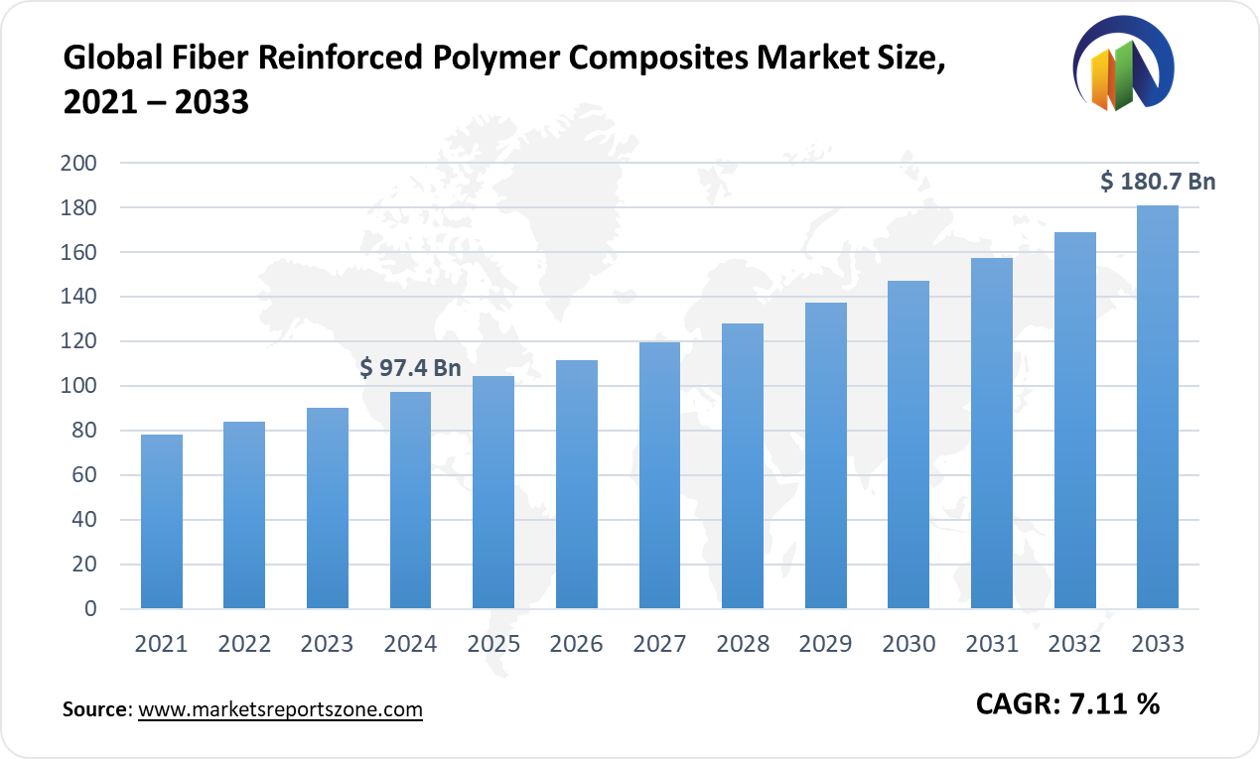
The Global Fiber Reinforced Polymer Composites Market Size is expected to reach USD 180.7 Billion by 2033 from USD 97.4 Billion in 2024, with a CAGR of around 7.11% between 2024 and 2033. The global fiber-reinforced polymer (FRP) composites market is driven by high strength-to-weight ratio demand and corrosion resistance needs. In aerospace, FRP composites are used in aircraft to reduce weight and enhance fuel efficiency. In construction, bridges and buildings use FRP for durability and seismic resistance. However, high production costs restrain market growth. Advanced manufacturing and automation require expensive machinery, limiting small manufacturers. Despite this, opportunities exist in renewable energy and electric vehicles. Wind turbine blades are made with FRP composites for enhanced performance and longer life. In electric vehicles, lightweight FRP materials improve battery efficiency and range. Sustainability trends also create potential. Copper(II) Hydroxide is occasionally used as a fungicide or catalyst in composite material processing, though not a primary FRP component.
Recyclable FRP composites are developed to reduce environmental impact. Companies invest in bio-based fibers and resins to meet regulatory standards and consumer expectations. Adoption is rising in marine and sporting goods industries as well. Boats use FRP composites for resistance to water damage and reduced maintenance costs. In sports, bicycles and helmets use FRP for enhanced performance and safety. As industries prioritize sustainability and lightweight materials, FRP composites continue gaining traction. Research focuses on cost-effective production and recycling techniques. With technological advancements, market expansion is expected across various sectors, making FRP composites indispensable in modern engineering.
Driver: High Strength-to-Weight Ratio Boosts Demand
Fiber-reinforced polymer (FRP) composites are widely used due to their exceptional strength-to-weight ratio. Industries seek materials that provide durability without adding excessive weight. In the railway sector, FRP composites are used in high-speed train bodies to enhance fuel efficiency and reduce wear on tracks. In the medical field, prosthetic limbs are designed with FRP materials to offer strength while remaining lightweight for user comfort. Defense applications also benefit, with military helmets and body armor utilizing FRP composites for high-impact resistance without burdening soldiers. In furniture design, FRP is replacing traditional wood and metal to create modern, lightweight, and durable chairs and tables.
Even in consumer electronics, smartphones and laptops incorporate FRP components to improve structural integrity while keeping devices slim and portable. Sports stadiums also use FRP-reinforced seating and roofing for structural reliability with minimal weight. These real-life applications highlight why industries increasingly adopt FRP composites. The ability to maintain strength while reducing weight leads to fuel savings, enhanced performance, and better user experience across multiple sectors. With ongoing advancements in material science, FRP composites continue to reshape industries, providing lightweight yet robust solutions for modern engineering challenges.
Key Insights:
- India's per capita consumption of composites is 0.55 kg, significantly lower than the USA's 11.5 kg and Germany's 7.7 kg
- Open mold processes, including hand and spray layup, dominate the Indian composites manufacturing landscape, representing 37% of production methods in 2024.
- The Indian composites materials industry is anticipated to reach 1,250 kilotons by 2030, with glass fiber and polyester resin remaining the dominant raw materials.
- Government initiatives like the National Rail Plan (NRP) 2030, Make in India, and Atmanirbhar Bharat are promoting the use of innovative materials, such as composites, in train manufacturing.
- The International Conference and Exhibition on Reinforced Plastics (ICERP) 2025 is scheduled for January 21-23, 2025, in Mumbai, aiming to showcase advancements and innovations in the composites industry.
Segment Analysis:
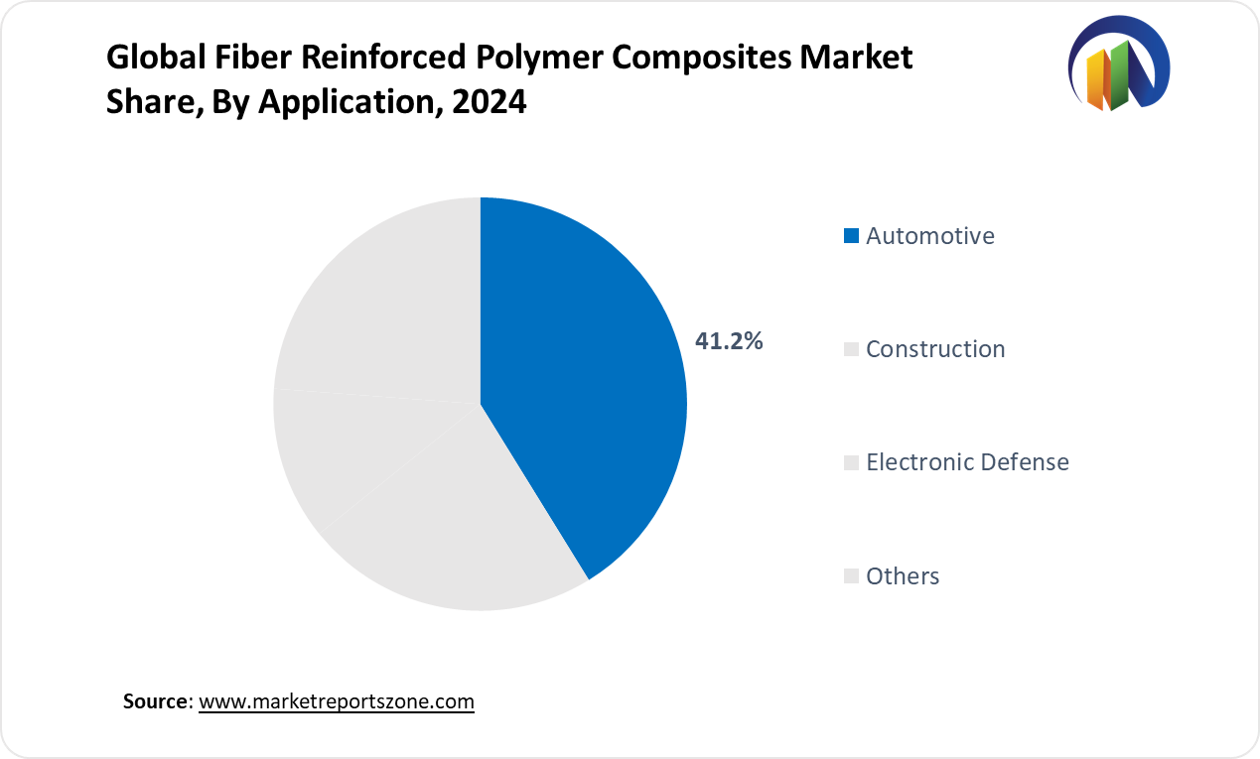
Fiber-reinforced polymer (FRP) composites are transforming multiple industries with their strength, durability, and lightweight properties. Glass fiber reinforced polymer (GFRP) composites dominate construction, where bridges, roadways, and pipelines use them for corrosion resistance and longevity. Carbon fiber reinforced polymer (CFRP) composites lead in the automotive sector, where luxury car brands integrate CFRP in body panels and interiors for weight reduction and enhanced performance. Basalt fiber reinforced polymer (BFRP) composites gain traction in electronics, with circuit boards utilizing BFRP for heat resistance and durability.
Aramid fiber reinforced polymer (AFRP) composites are critical in defense, as military-grade bulletproof vests and combat helmets rely on AFRP for impact absorption and safety. The construction sector increasingly adopts FRP rebars to replace traditional steel reinforcements in high-rise buildings, preventing rust and improving lifespan. In automotive racing, CFRP materials are used in Formula 1 cars for speed and aerodynamic efficiency. Electronics manufacturers use BFRP to produce heat-resistant casings for high-performance processors. Defense applications expand as AFRP is integrated into military aircraft components for enhanced safety and reduced weight. As industries push for stronger and lighter materials, FRP composites continue to gain traction, ensuring innovation and efficiency across diverse applications worldwide.
Regional Analysis:
The fiber-reinforced polymer (FRP) composites market is expanding across all major regions, driven by industrial advancements and infrastructure development. In North America, FRP composites are widely used in aerospace, with commercial aircraft manufacturers incorporating them into fuselages and wings for fuel efficiency and durability. In Europe, the demand grows in renewable energy, as wind turbine manufacturers use FRP blades to enhance performance and withstand harsh weather conditions. Asia-Pacific leads in automotive production, where electric vehicle manufacturers integrate FRP components into chassis and interiors for weight reduction and extended battery range.
In the Middle East & Africa, construction projects rely on FRP composites for corrosion-resistant water pipelines and lightweight modular housing, ensuring sustainability in extreme climates. Latin America sees increased adoption in sports equipment, with FRP materials used in high-performance surfboards and protective gear for durability and impact resistance. North American sports industries also utilize FRP composites in advanced hockey sticks and baseball bats for improved strength and flexibility. European railway manufacturers adopt FRP in train interiors to enhance passenger safety while reducing overall weight. As global industries shift towards lightweight, high-strength, and sustainable materials, FRP composites continue to play a vital role in modern engineering and innovation worldwide.
Competitive Scenario:
Leading companies in the fiber-reinforced polymer (FRP) composites market have recently made significant advancements across various sectors. Hexcel Corporation has introduced innovative carbon fiber materials tailored for aerospace applications, enhancing aircraft performance and fuel efficiency. Mitsubishi Chemical Group Corporation has expanded its portfolio by developing sustainable FRP solutions, focusing on recyclable composites to meet environmental regulations. Plasan has advanced military-grade FRP composites, providing enhanced protection for defense vehicles. Röchling SE & Co. KG has pioneered FRP components for medical equipment, improving durability and reducing weight in diagnostic machines. SABIC has launched high-performance FRP materials for consumer electronics, enabling slimmer and more resilient devices.
SGL Carbon has focused on automotive innovations, supplying FRP parts that contribute to vehicle weight reduction and energy efficiency. Solvay has collaborated with renewable energy firms to produce FRP materials for wind turbine blades, extending their operational lifespan. TORAY INDUSTRIES, INC. has developed advanced FRP composites for sporting goods, enhancing equipment performance for athletes. TPI Composites Inc. has expanded its manufacturing capabilities to meet the growing demand for FRP components in various industries. These developments underscore the industry's commitment to innovation and sustainability, driving the adoption of FRP composites across diverse applications.
Fiber Reinforced Polymer Composites Market Report Scope
| Report Attribute | Details |
|---|---|
| Market Size Value in 2024 | USD 97.4 Billion |
| Revenue Forecast in 2033 | USD 180.7 Billion |
| Growth Rate | CAGR of 7.11% from 2025 to 2033 |
| Historic Period | 2021 - 2024 |
| Forecasted Period | 2025 - 2033 |
| Report Coverage | Revenue forecast, company ranking, competitive landscape, growth factors, and trends |
| Regions Covered | North America; Europe; Asia Pacific; Latin America; Middle East & Africa |
| Countries Covered | U.S.; Canada; Mexico, UK; Germany; France; Spain; Italy; Russia; China; Japan; India; South Korea; Australia; Southeast Asia; Brazil; Argentina; Saudi Arabia; UAE; South Africa |
| Key companies profiled | Avient Corporation; Hexcel Corporation; Mitsubishi Chemical Group Corporation.; Plasan; Röchling SE & Co. KG; SABIC; SGL Carbon; Solvay; TORAY INDUSTRIES, INC.; TPI Composites Inc.; Other Major Players |
| Customization | Free report customization (equivalent up to 8 analysts working days) with purchase. Addition or alteration to country, regional & segment scope. |
The Global Fiber Reinforced Polymer Composites Market report is segmented as follows:
By Product,
- Glass Fiber Reinforced Polymer (GFRP) Composites
- Carbon Fiber Reinforced Polymer (CFRP) Composites
- Basalt Fiber Reinforced Polymer (BFRP) Composites
- Aramid Fiber Reinforced Polymer (AFRP) Composites
By Application,
- Automotive
- Construction
- Electronic
- Defense
- Others
By Region,
- North America
- U.S.
- Canada
- Mexico
- Europe
- UK
- Germany
- France
- Spain
- Italy
- Russia
- Rest of Europe
- Asia Pacific
- China
- Japan
- India
- South Korea
- Australia
- Southeast Asia
- Rest of Asia Pacific
- Latin America
- Brazil
- Argentina
- Rest of Latin America
- Middle East & Africa
- Saudi Arabia
- UAE
- South Africa
- Rest of Middle East & Africa
Key Market Players,
- Avient Corporation
- Hexcel Corporation
- Mitsubishi Chemical Group Corporation.
- Plasan
- Röchling SE & Co. KG
- SABIC
- SGL Carbon
- Solvay
- TORAY INDUSTRIES, INC.
- TPI Composites Inc.
- Other Major Players
Frequently Asked Questions
How big is the Fiber Reinforced Polymer Composites Market market?
The Global Fiber Reinforced Polymer Composites Market Size is expected to reach USD 180.7 Billion by 2033 from USD 97.4 Billion in 2024.
What is the Fiber Reinforced Polymer Composites Market market growth?
The Global Fiber Reinforced Polymer Composites Market is expected to grow at a compounded annual growth rate of 7.11% between 2024 and 2033.
Which region has the largest market share in Fiber Reinforced Polymer Composites Market market?
The North America holds the largest market share in the global Fiber Reinforced Polymer Composites Market in 2024.
Who are the key players in Fiber Reinforced Polymer Composites Market market?
Key players profiled in the global Fiber Reinforced Polymer Composites market are Avient Corporation; Hexcel Corporation; Mitsubishi Chemical Group Corporation.; Plasan; Röchling SE & Co. KG; SABIC; SGL Carbon; Solvay; TORAY INDUSTRIES, INC.; TPI Composites Inc.; Other Major Players.